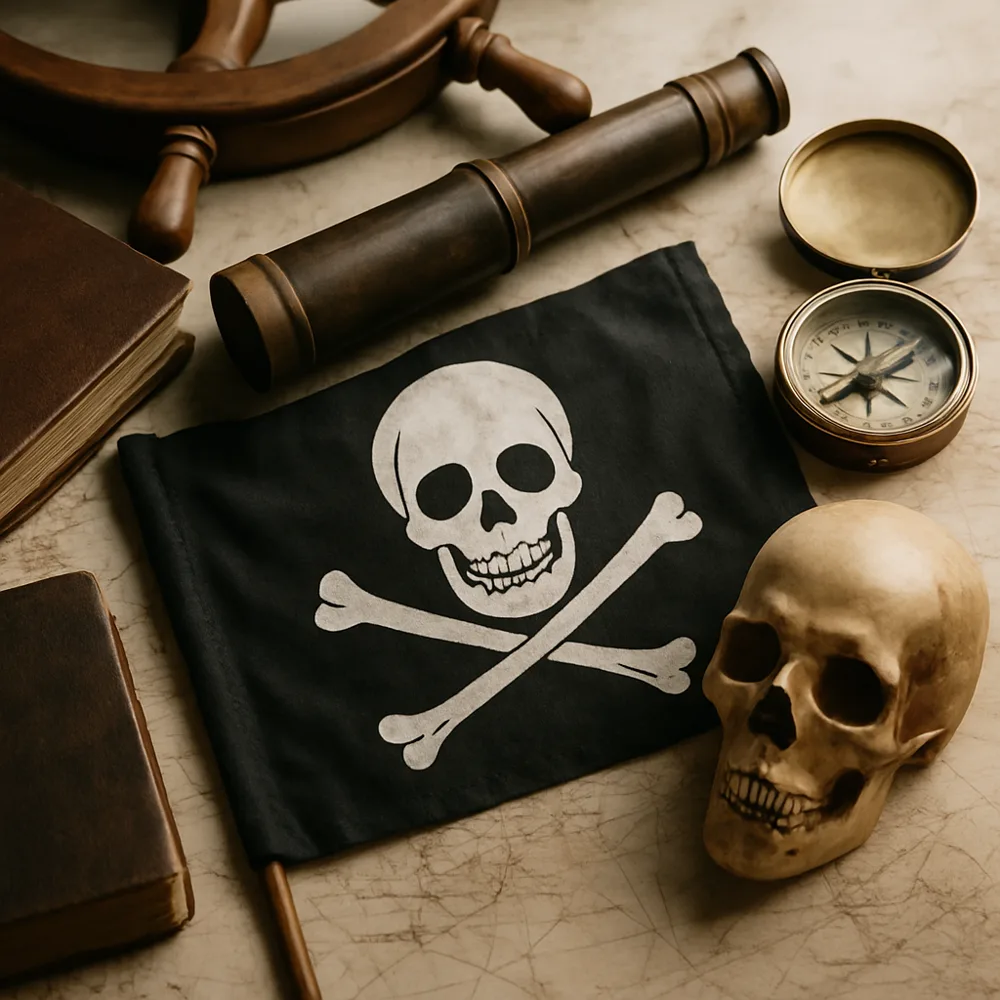
Blackbeard, also called Edward Teach or Thatch in contemporary records, was an English pirate active in the early eighteenth-century Atlantic. He is associated with the Caribbean and the coast of North America, especially the region around the Outer Banks. The surviving evidence is incomplete, and even his name appears in variant forms. What made him notorious was not simply a long career of battles; it was the reputation that spread through reports, official correspondence, and printed accounts.
Descriptions of Blackbeard emphasize his appearance and theatrical use of fear. Later writers tell of burning fuses in his beard during combat, though such colorful details should be treated carefully because accounts were shaped by the appetite for sensational stories. Still, the broader point is plausible: a frightening image could encourage a merchant crew to surrender quickly. Threats and display were practical tools in an occupation where every prolonged fight risked injury, damage, and escape by the intended prize.
In 1718, a force sent by Virginia lieutenant governor Alexander Spotswood confronted Blackbeard near Ocracoke Island. The pirate was killed in the ensuing fight, and the episode became a lasting part of his legend. Reports of his death circulated widely, but later popular culture added layers that cannot always be verified. Distinguishing the well-attested outline from dramatic embellishment helps explain both the historical pirate and the powerful character that later generations made of him.