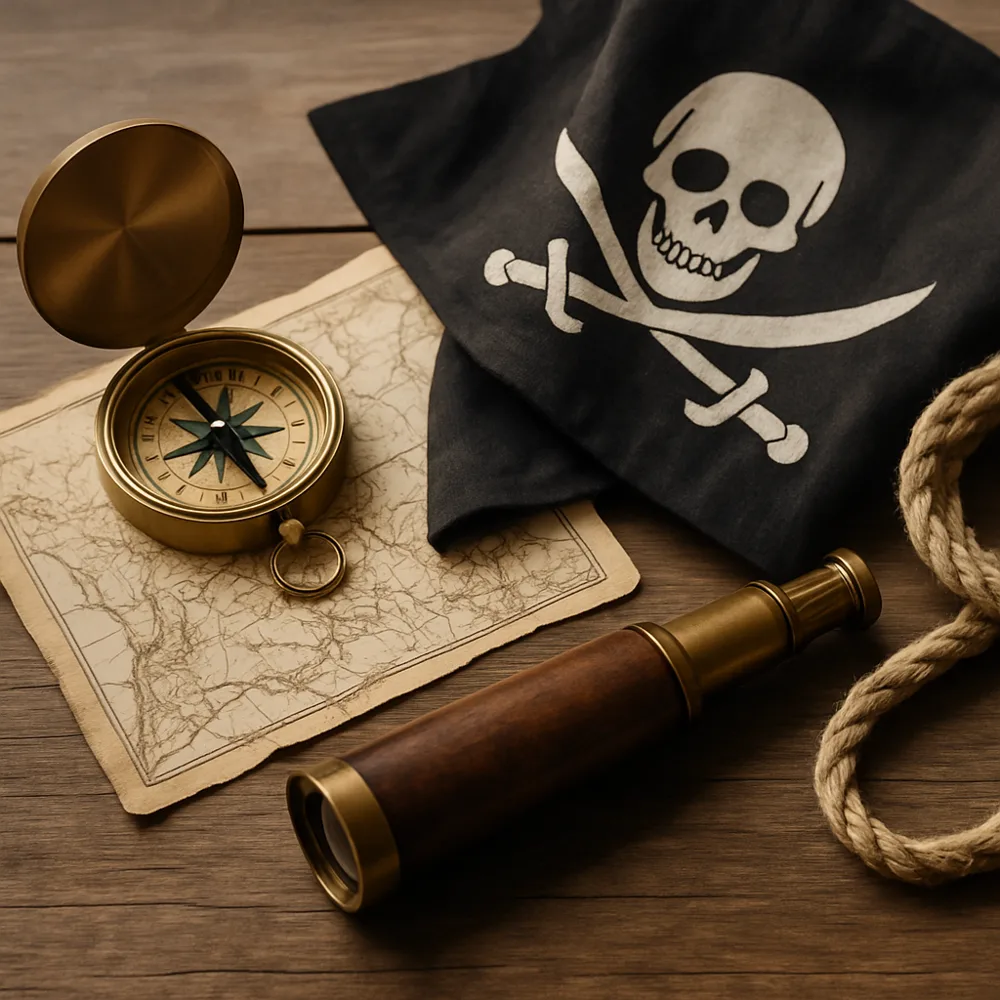
The image of a pirate map with an X marking buried gold is deeply familiar, largely because of adventure fiction and later entertainment. Historical maps did exist, and sailors used charts to navigate coasts and routes. But a navigational chart and a treasure map are not the same thing. Evidence that pirates commonly created secret maps directing future readers to buried fortunes is scarce. The popular image should not be mistaken for a routine feature of pirate life.
Secrecy, fear of capture, and the practical division of captured goods all complicate the idea of a map left behind for later discovery. A crew might hide something temporarily, but that does not prove it planned a permanent cache. Many stories about maps emerged through novels, newspapers, or retellings whose authors had a strong reason to make a tale more exciting. Checking when a map first appeared and whether it can be traced to a contemporary source is a useful first step.
Historical maps still offer plenty to explore. Charts show how mariners represented coastlines, hazards, ports, and routes with the knowledge available at the time. Comparing an old chart with a modern map can reveal changing geographic understanding, as well as the importance of local sailing knowledge. If a supposed pirate treasure map is offered as historical, look for evidence of its age, provenance, and original context. Its value may lie in the story people told about it, not in directions to a buried prize.