Piratesdaily
What Historians Mean by the Golden Age of Piracy
From the archive — latest notes.
Legends & Lore
Separate enduring pirate tales from the historical evidence behind them.
Ships & Seamanship
Learn how sailing vessels, navigation, weather, and life at sea worked in the age of sail.
Ports & Routes
Follow the harbors, trade routes, and coastal communities connected to maritime history.
Latest
October 2026
September 2026
- How Sailing Ships Read the Wind
- Navigation Before Modern GPS
- Life in a Caribbean Pirate Port
- Privateers and Pirates: What Was the Difference?
- Why Pirates Buried Treasure
- The Truth About Pirate Treasure Maps
- How Pirate Trials Worked
- The Pirate Republic of Nassau
- Piracy in the Indian Ocean
- Bartholomew Roberts and the Scale of His Voyages
- Pirates and the Transatlantic Slave Trade
Nearby places
All places

Reading Pirate History with a Careful Eye
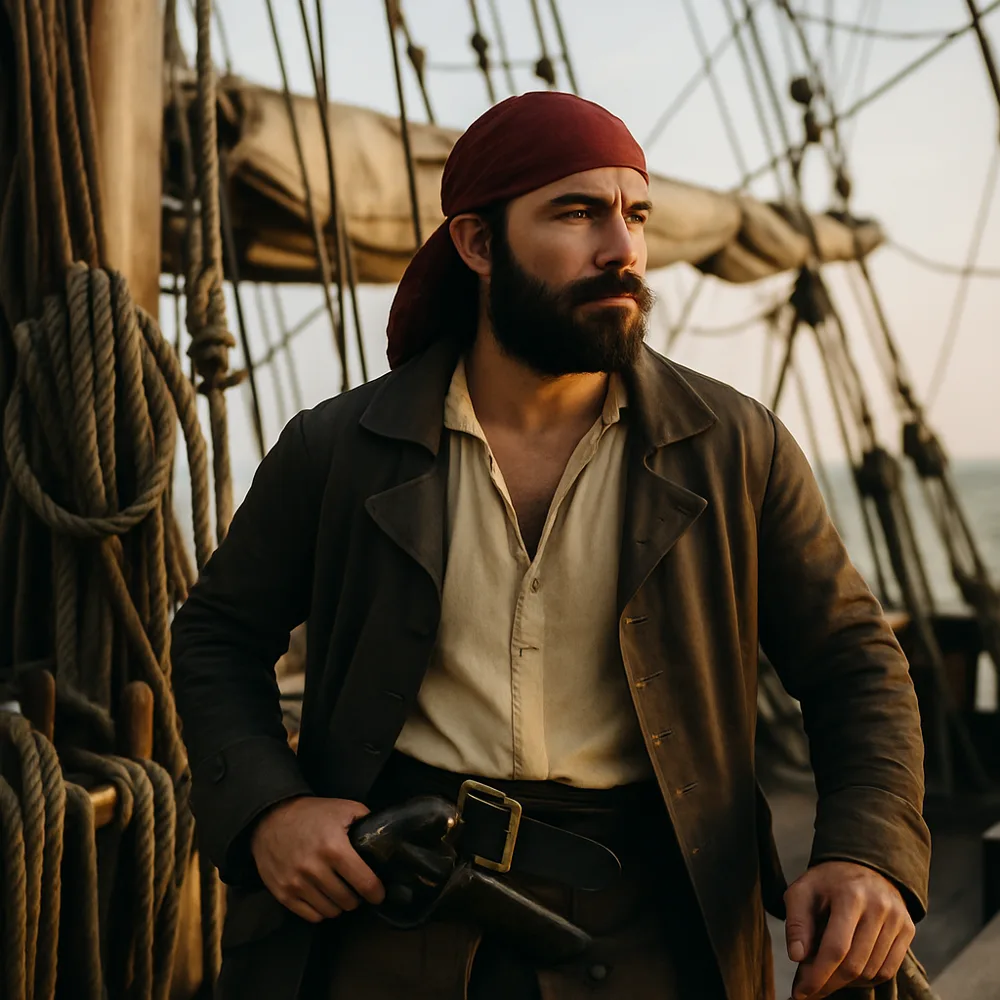
Piracy has been part of seafaring for as long as ships have carried valuable cargo, but the pirates most people picture today belong to a fairly short stretch of time. Historians usually place the so-called Golden Age between the late seventeenth century and the 1720s, when crews operating in the Caribbean, along the coast of North America, off West Africa and in the Indian Ocean preyed on the expanding trade of European empires. Understanding what historians mean by the Golden Age of Piracy is a useful starting point, because it shows why this period left such a deep mark on popular imagination.
Much of what we know comes from a limited set of sources: trial records, colonial correspondence, ships' logs, newspaper reports and accounts written by captives or former sailors. Each has its own bias. Officials wanted to show that piracy was being suppressed, prisoners sometimes exaggerated their suffering, and early popular histories mixed documented events with dramatic invention. Reading these sources side by side is how researchers separate the plausible from the embellished.
That is especially true for famous names. Figures such as Edward Teach, better known as Blackbeard, built reputations that worked almost like weapons, encouraging merchant crews to surrender without a fight. Our look at the man behind the reputation explores how fear, publicity and fact became intertwined. Likewise, the stories of Anne Bonny and Mary Read survive through a small number of records, which makes them fascinating but also open to debate.
Beyond individual pirates, the bigger picture lies in ordinary maritime life: the hard labour of handling sails and rigging, the dangers of disease and storms, the importance of ports where goods could be sold and crews resupplied, and the naval campaigns that eventually brought the era to an end. Exploring how a pirate ship was actually pursued and captured, or how trade routes shaped where raiders gathered, reveals a world far more complex than any legend.
Whether you are new to the subject or already know your sloops from your brigantines, the articles here aim to treat pirate history as history: grounded in evidence, honest about uncertainty and still full of remarkable stories.